Back to Blog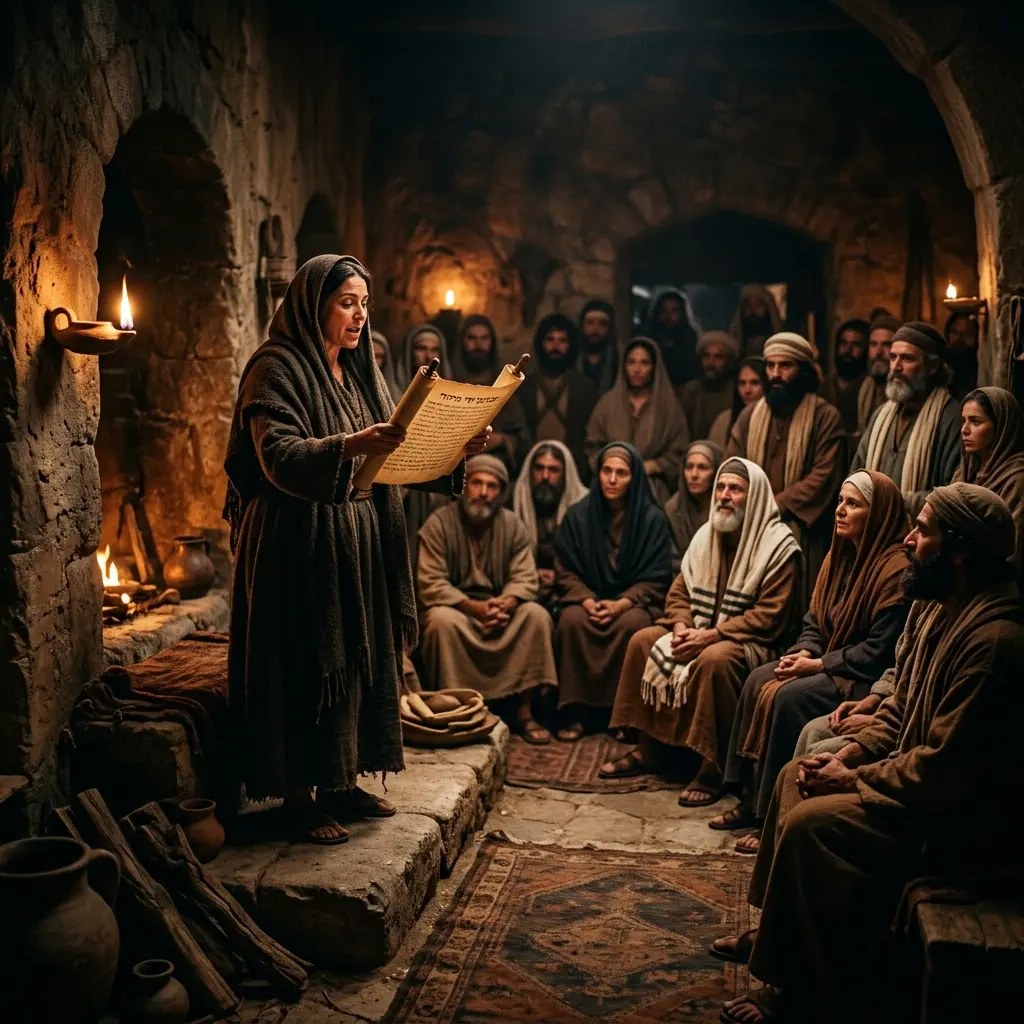
The Role of Women in the Early Church
 By Selah Study Team
The Radical Inclusion of Jesus Christ
When examining the role of women in the early church, the starting point must undeniably be the life and earthly ministry of Jesus Christ. In the ancient Greco-Roman and Jewish contexts of the first century, women were largely relegated to the domestic sphere. They were generally not permitted to study the Torah under a rabbi, testify as credible witnesses in a court of law, or participate equally in public religious life. However, Jesus radically disrupted these patriarchal norms at every turn. He consistently engaged women in deep theological dialogue, as clearly seen in his extended conversation with the Samaritan woman at the well in John 4—a profound interaction that shattered rigid gender, social, and ethnic barriers simultaneously. She subsequently became the first evangelist to her entire town.
Furthermore, Jesus openly welcomed women as his devoted, traveling disciples. Luke 8:1-3 explicitly names Mary Magdalene, Joanna, and Susanna as women who accompanied Jesus and the Twelve, supporting his ministry out of their own financial means. This level of intentional inclusion was virtually unprecedented in the ancient Mediterranean world and set the foundational trajectory for the early Christian community. Perhaps the most striking evidence of Jesus' elevation of women is their courageous presence at his crucifixion and resurrection. While the majority of his male disciples fled in terror, it was the women who remained steadfast at the foot of the cross. Most importantly, Jesus chose women to be the first witnesses of his resurrection—the very cornerstone of the Christian faith. In a society that dismissed the testimony of women, the resurrected Christ entrusted Mary Magdalene with the profound responsibility of proclaiming his return to the male apostles. For this reason, she is rightfully remembered in church history as the 'apostle to the apostles.'
Paul's Co-Workers: Phoebe, Priscilla, and Junia
The letters of the Apostle Paul are occasionally viewed through the narrow lens of specific restrictive passages, but a broader, comprehensive reading of his epistles reveals a vast network of female co-workers who were absolutely instrumental in the spread of the gospel. In Romans 16 alone, Paul greets twenty-nine specific individuals by name, and notably, ten of them are women. This chapter stands as a monumental historical testament to female leadership in the primitive church. Paul does not merely mention these women in passing; he enthusiastically commends them as vital, active partners in his apostolic mission. They are described using the same formal titles and terms of profound respect that Paul uses for his male colleagues, indicating a deeply egalitarian partnership in the arduous work of ministry.
Let us first consider Phoebe, whom Paul introduces to the Roman church in Romans 16:1-2. He refers to her as a 'diakonos' (deacon or servant) of the church in Cenchreae and a 'prostatis' (benefactor, leader, or patron) to many, including Paul himself. The title 'diakonos' in the early church context suggests a highly recognized, official ministry of leadership and service. She was not a subordinate helper but a recognized leader in the Cenchrean assembly. Furthermore, as the trusted bearer of Paul's letter to the Romans, Phoebe would have been tasked with reading the letter aloud to the house churches in Rome. In the Greco-Roman tradition of letter delivery, the courier was expected to accurately answer questions and dynamically interpret the author's intent. She was, in essence, the first expositor of the Epistle to the Romans, entrusted with conveying Paul's complex theological masterpiece to the epicenter of the empire.
Priscilla (often mentioned alongside her husband Aquila) is another towering figure in the early Christian movement. In several New Testament references, Priscilla's name appears before her husband's—a highly unusual practice in the fiercely patriarchal Roman world that likely signifies her prominence, superior social status, or primary leadership role. Priscilla and Aquila were tentmakers who hosted a house church and traveled extensively as bold missionaries. In Acts 18, we see Priscilla and Aquila taking Apollos—an eloquent, highly educated preacher—aside to patiently explain the way of God to him more accurately. Priscilla was undeniably a teacher of teachers, actively shaping the foundational theological understanding of early Christian leaders.
One of the most fascinating and historically debated figures is Junia, explicitly mentioned in Romans 16:7. Paul refers to Andronicus and Junia (likely a married couple or siblings) as 'outstanding among the apostles,' specifically noting that they were in Christ before he was. For the first millennium of Christian history, biblical scholars universally recognized Junia as a female apostle. It was not until the Middle Ages that translators, growing increasingly uncomfortable with the idea of a female apostle, began altering her name to a masculine form, 'Junias.' However, modern textual criticism has decisively reclaimed Junia's authentic female identity, demonstrating unequivocally that women were numbered among the prestigious apostolic circle, laboring tirelessly to establish new Christian communities and suffering harsh imprisonment for their unwavering faith.
House Churches: The Domain of Female Leadership
To genuinely understand the massive prominence of women in early Christianity, one must understand the architectural and social structure of the early church itself. For the first three centuries, Christians did not possess dedicated public buildings or grand cathedrals for worship. Instead, they gathered intimately in private homes. This domestic setting was deeply significant for women. In the Greco-Roman world, the public square (the forum or the marketplace) was exclusively the domain of men, while the expansive home (the domus) was the designated sphere over which women exerted considerable influence, management, and authority. By locating its sacred worship and organizational life strictly in the household, the early church inadvertently created a thriving space where female leadership could flourish naturally and effectively.
Wealthy, independent women who owned large homes became crucial patrons and protectors of the vulnerable Christian movement. The New Testament mentions several such prominent women: Lydia in Philippi, a successful businesswoman whose household became the very first church in Europe (Acts 16); Nympha in Laodicea, who faithfully hosted a church in her home (Colossians 4:15); and Chloe in Corinth, whose household associates brought vital reports directly to Paul (1 Corinthians 1:11). Furthermore, Mary, the mother of John Mark, hosted a massive, politically significant gathering of believers in Jerusalem (Acts 12:12). These women were not merely hospitable hostesses providing food and drink; in the context of the Roman patronage system, the owner of the home functioned as the ultimate protector, the primary financial sponsor, and often the presiding figure of the religious assembly gathering under their roof. They actively provided the necessary infrastructure for the fledgling church to survive and expand within a hostile empire.
Spiritual Gifts, Prophecy, and Public Worship
The breathtaking outpouring of the Holy Spirit at Pentecost was a profoundly egalitarian event that leveled the spiritual playing field. Peter boldly quoted the prophet Joel to explain the miraculous phenomenon: 'In the last days, God says, I will pour out my Spirit on all people. Your sons and daughters will prophesy... Even on my servants, both men and women, I will pour out my Spirit in those days, and they will prophesy' (Acts 2:17-18). The early church was brilliantly characterized by a charismatic vibrancy where spiritual gifts were distributed powerfully without any regard to gender. Prophecy, considered one of the highest and most edifying gifts in the early church, was regularly and authoritatively exercised by women.
The Book of Acts specifically highlights the four unmarried daughters of Philip the evangelist, who were universally recognized as powerful prophets in the region of Caesarea (Acts 21:9). Historical records from the early church fathers indicate that these women were highly venerated for their profound spiritual insight and leadership long after the apostolic era. Moreover, in 1 Corinthians 11, when Paul discusses the complex cultural guidelines for head coverings, he implicitly affirms the established reality that women were actively praying and prophesying aloud in the public assemblies in Corinth. The core debate in that specific passage is not about whether women should speak—it is entirely taken for granted that they are actively participating in leading worship and sharing divine revelation—but rather the cultural, respectful manner in which they should do so to avoid scandalizing the broader society.
Key Women of the Early Christian Movement
- Mary Magdalene: The first commissioned witness of the glorious resurrection, rightfully honored throughout history as the 'apostle to the apostles.'
- Phoebe: A highly respected deacon of the church in Cenchreae, deeply trusted to deliver and accurately interpret Paul's theological masterpiece to the Romans.
- Priscilla: A brilliant teacher, church planter, and missionary who meticulously instructed Apollos and repeatedly risked her own life for the Apostle Paul.
- Junia: Specifically recognized by Paul as being 'outstanding among the apostles' and a fellow, long-suffering prisoner for the explosive gospel message.
- Lydia: A wealthy, independent businesswoman who faithfully became Paul's very first convert in Europe and courageously hosted the Philippian church.
- Philip's Daughters: Four exceptional women highly recognized as esteemed prophets who shaped the early Christian community of Caesarea.
- Nympha: A generous homeowner, leader, and faithful patron who hosted a vital church gathering in the challenging city of Laodicea.
- Tabitha (Dorcas): A deeply beloved disciple in Joppa widely known for her extensive charitable works, profound compassion, and vital leadership in caring for the city's vulnerable widows.

"There is no longer Jew or Greek, there is no longer slave or free, there is no longer male and female; for all of you are one in Christ Jesus. — Galatians 3:28"
The Shift Toward Patriarchal Institutionalization
If women held such incredibly prominent, indispensable roles in the first century, why did their leadership become so drastically restricted in the centuries that followed? The sobering answer lies largely in the institutionalization of the church and its gradual, steady assimilation into the broader Greco-Roman culture. In its earliest, charismatic phase, Christianity was a marginalized, counter-cultural, and frequently persecuted sect meeting entirely in private homes. This structural fluidity allowed for an organic, beautifully egalitarian leadership model based fundamentally on spiritual gifting rather than societal status or gender. However, as the church rapidly grew in numbers, immense wealth, and eventual societal prominence, it desperately sought to make itself appear more respectable and orderly to the Roman world.
Roman society was rigidly, ruthlessly patriarchal, governed by the ironclad legal concept of 'paterfamilias'—the absolute, life-and-death authority of the male head of the household over everyone residing under his roof. Critics of early Christianity frequently pointed to the radical independence of Christian women as scandalous proof that the religion was a subversive, dangerous cult actively aiming to destroy traditional Roman family values and social order. In response to this immense cultural pressure, and as church leadership slowly transitioned from the domestic sphere of private house churches to the highly public sphere of grand basilicas, the church began to adapt to survive. It started to aggressively mirror the hierarchical, male-dominated structures of the Roman Empire itself. The radical equality boldly declared in Galatians 3:28 was gradually spiritualized—interpreted as applying purely to equality in salvation in the world to come, but completely nullified regarding equality in ecclesiastical function, leadership, or societal structures in the present world. Roles once actively held by women, such as deacon, teacher, and prophet, were steadily redefined, minimized, or entirely restricted to men, culminating in formalized church councils of the fourth and fifth centuries that tragically barred women from ordination and public ministry.
Reclaiming the Legacy of Early Christian Women
Today, the global church is undergoing a profound, necessary period of historical recovery and honest reflection. By carefully dusting off the heavy layers of historical bias and rigorously examining the biblical text in its authentic, original context, we are powerfully rediscovering the vital, absolutely indispensable role that women played in the very birth and rapid expansion of early Christianity. They were never merely passive bystanders, quiet observers, or silent supporters; they were wealthy patrons, fearless evangelists, brilliant teachers, serving deacons, powerful prophets, and recognized apostles. They aggressively financed perilous missions, hosted expanding congregations, suffered brutal persecution, and masterfully shaped early theology.
Recognizing the stunning historical reality of these female pioneers is not a modern concession to secular movements, but rather a deeply faithful, profoundly biblical return to the radical, world-changing ethos of the early church. The redemptive message of Jesus Christ purposefully dismantled the dividing walls of hostility, warmly inviting both men and women to participate fully and equally in the kingdom of God. As modern believers continue to navigate challenging questions of gender, calling, and leadership, the courageous, faithful women of the early church stand as enduring testimonies to the untamed power of the Holy Spirit, who distributes gifts freely to all, calling absolutely every believer to participate boldly in God's great redemptive work.
Frequently Asked Questions
 How do we reconcile women's leadership with 1 Timothy 2:12?
The verse 1 Timothy 2:12 ('I do not permit a woman to teach or to assume authority over a man') is heavily debated. Many top biblical scholars emphasize the critical historical and cultural context of Ephesus, where Timothy was actively pastoring. Ephesus was the massive center of the pagan cult of Artemis, which featured female domination and the rampant spread of false teachings. Paul's restriction is highly regarded as a specific, localized injunction against untrained, newly converted women aggressively spreading heresy, rather than a universal, eternal ban on all female leadership—especially considering that Paul warmly commended brilliant female teachers like Priscilla and powerful female leaders like Phoebe elsewhere in his own letters.
Was Junia really a female apostle?
Yes, overwhelmingly so. For the absolute entirety of the first millennium of church history, esteemed commentators universally understood 'Junia' in Romans 16:7 as a prominent woman. The name is a very common Roman female name found in numerous historical inscriptions. It was only during the later Middle Ages, heavily influenced by deeply ingrained cultural assumptions that a woman simply could not be an apostle, that the name was artificially and incorrectly altered to the completely fabricated masculine 'Junias.' Modern, rigorous textual scholarship has thoroughly debunked this sexist alteration, officially restoring Junia to her rightful, undeniable place as a prominent female apostle in the early Christian movement.
Did women actually serve as deacons in the early church?
Absolutely. Romans 16:1 explicitly and proudly names Phoebe as a 'diakonos' (deacon) of the robust church in Cenchreae. The external historical record also overwhelmingly confirms this biblical fact. In the early second century, the powerful Roman governor Pliny the Younger wrote a detailed letter to Emperor Trajan recounting his harsh interrogation of two Christian women whom he explicitly referred to as 'ministrae' (the direct Latin equivalent of deacons). The vital order of female deacons flourished actively in the church for centuries, particularly in the East, where they assisted in the necessary baptism of women, cared for the gravely sick, and ministered bravely to severely marginalized populations.